Review of the VR Business Club Online Talk with Roland Schulze from ActivateFuture
On Thursday, November 6, from 11 a.m. to 12 p.m., the VR Business Club addressed a topic that is currently of great concern to many companies. The online talk with Roland Schulze, co-founder of ActivateFuture, highlighted the key changes brought about by the introduction of AI and showed why emotional factors are crucial to the success of these transformation processes.
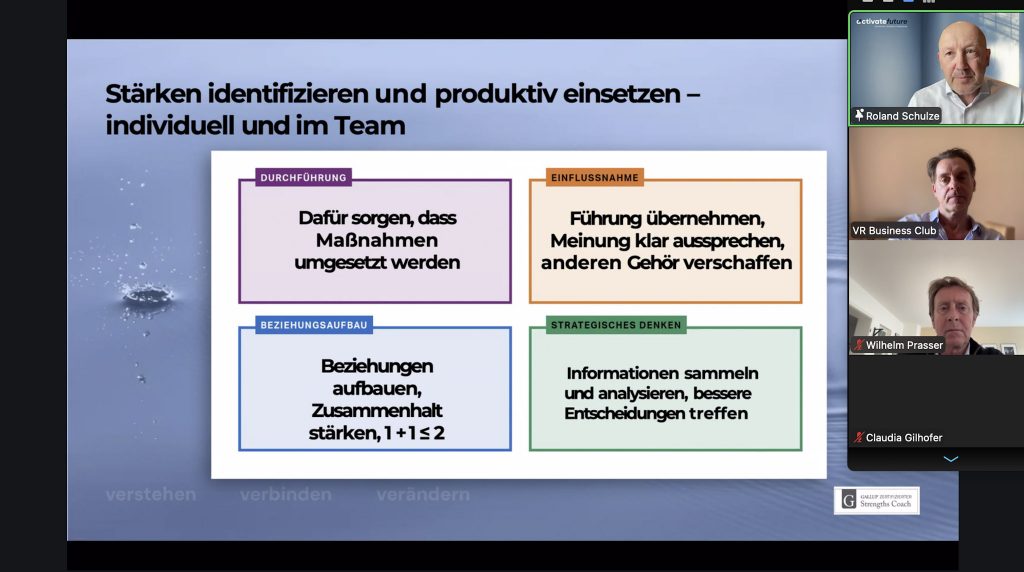
Roland made it clear that AI projects are often conceived and implemented from a technical perspective, while the cultural impact within the company is often neglected. As soon as rational tasks are transferred to AI systems, the importance and value of human strengths increase. Creativity, relationship management, and emotional sensitivity become key competencies in a new working environment. For companies, this means clarifying roles and expectations at an early stage and actively developing their own leadership culture.
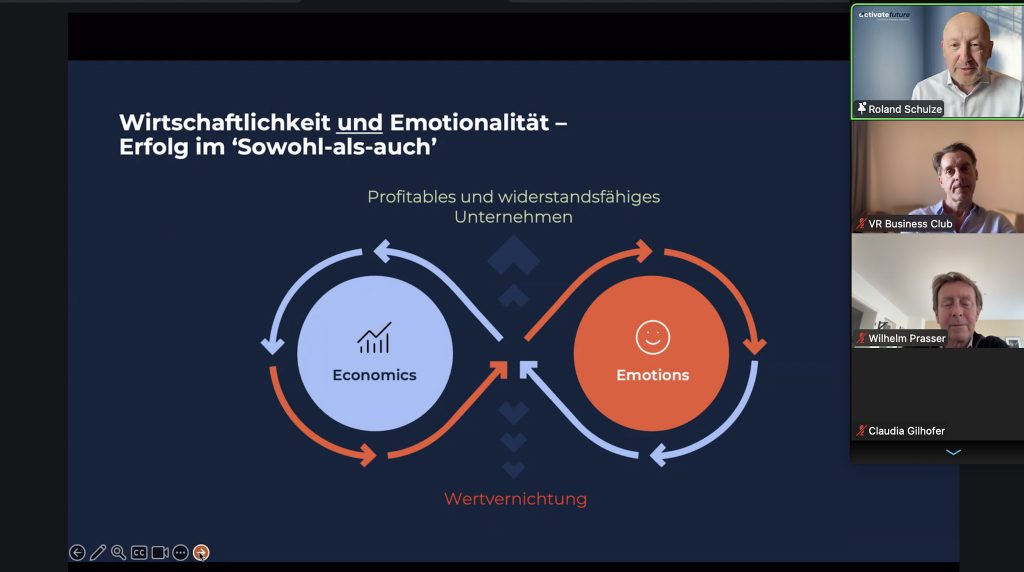
One focus of the talk was on ActivateFuture’s approach, which is based on polarity thinking. This approach views areas of tension such as innovation and stability or service orientation and efficiency as two sides that must be used together. Instead of either/or, the result is both/and, which improves the performance of organizations. Roland used international examples to show how powerful this way of thinking can be when implemented consistently.
The topic of emotion and efficiency received a great deal of attention. Roland presented current key figures that illustrate how strongly emotional attachment influences the quality of work. According to his analysis, emotional attachment in Germany has recently declined, which he attributed in part to reduced flexibility and a lack of appreciation. At the same time, he highlighted the economic potential that companies can leverage if they consciously promote emotional strength.
Another key topic was the findings of a Gallup survey. This shows that confidence is much more closely linked to emotional engagement than pure stability. Roland therefore emphasized how important it is to work with employees to create clarity about goals and paths. Terms such as responsibility and confidence must first be given a common understanding within the company before they can provide guidance.
The participants then discussed how companies can achieve market leadership by giving equal consideration to economic and emotional aspects. Roland recommended regular impulse checks and clear emotional target images as key elements of sustainable leadership. As AI will take over many operational tasks in the future, human skills such as interpersonal connection and empathy will become more important and must be actively valued.
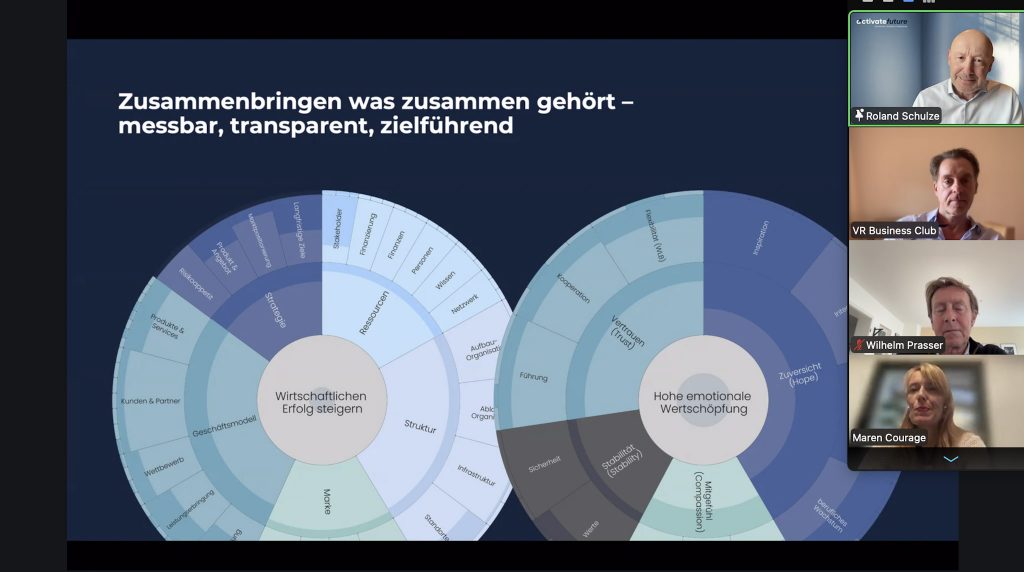
Finally, Roland showed how values in organizations can not only be defined, but also made measurable and firmly integrated into everyday life. He referred to examples from the international economy that demonstrate how much lived values influence cultural development and thus also entrepreneurial success.